
| What it is | Passion flower (Passiflora incarnata) — a climbing vine whose leaves and flowers are used in calming herbal traditions. |
| How it works | Flavonoid compounds are thought to gently support GABA, the nervous system’s calming messenger. |
| Traditional use | Relaxation, a quieter mind and easier, more restful evenings. |
| On the label | Look for the full botanical name, the plant part, a standardized extract and a clear amount per serving. |
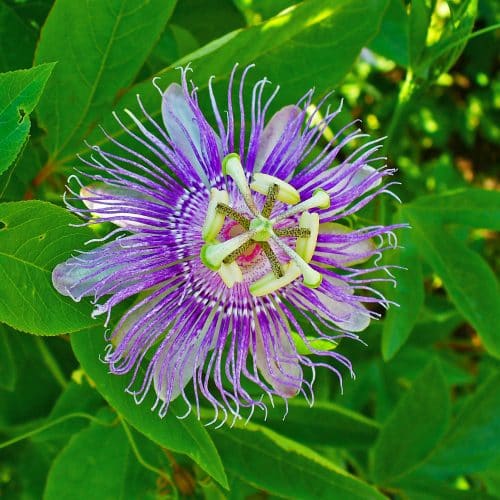
Passion flower is one of the most recognisable calming botanicals in the herbal world — and one of the most misunderstood. People often assume a plant either “works like a sedative” or does nothing at all. The reality is more interesting: passion flower is valued precisely because it is gentle. This guide walks through what the plant actually is, the mechanism researchers point to, how dosage tends to be handled, and how to read a passion flower ingredient on a supplement label so you know what you are really buying.
Passion flower is the common name for Passiflora incarnata, a fast-growing climbing vine native to the southeastern United States and long naturalised across warm regions of the world. Its striking, fringed purple-and-white blooms gave the plant its name, but the parts used in herbal preparations are usually the aerial parts — the leaves, stems and flowers — harvested and dried. Native peoples of the Americas used the plant traditionally, and it was later adopted into European herbal practice, where it became a familiar ingredient in calming teas and tinctures. The NIH National Center for Complementary and Integrative Health summarises its traditional use and the state of the evidence on its passionflower page.
There are hundreds of Passiflora species, but Passiflora incarnata is the one most associated with nerve health and everyday calm. That botanical precision matters. When you see “passion flower” on a label, the species and the plant part tell you whether you are getting the traditional calming herb or a related plant grown mainly for its fruit. This is the first thing an informed buyer checks.
To understand why passion flower is used for nerve health, it helps to know a little about how the nervous system manages its own volume. Your brain and nerves rely on chemical messengers called neurotransmitters. Some are excitatory — they turn activity up — and some are inhibitory, quieting things down. The main inhibitory, or calming, messenger is gamma-aminobutyric acid, better known as GABA. When GABA activity is healthy, the nervous system finds it easier to shift out of a keyed-up state and into rest. Janda and colleagues review the mechanistic and clinical literature in “Passiflora incarnata in Neuropsychiatric Disorders — A Systematic Review,” Nutrients, 2020 (PubMed 33352740).
Passion flower is rich in plant compounds called flavonoids — including chrysin, vitexin and isovitexin — and researchers believe some of these interact with the same GABA system the body uses to settle itself. Rather than flooding the body with a strong external signal, passion flower appears to nudge the body’s own calming machinery. That is the mechanistic reason it is described as supportive rather than sedating: it is thought to work with your nervous system, encouraging the calm response you are already capable of, instead of forcing it.
It is worth being honest about the state of the evidence. Passion flower has been studied in small human trials and in laboratory research, and traditional use spans centuries, but botanical science is rarely as clear-cut as a single pharmaceutical mechanism. What we can say fairly is that the GABA pathway is the leading, best-supported explanation for why passion flower has earned its long-standing reputation for calm.
People sometimes want a botanical to hit like a switch. Passion flower does not, and that is by design. A gentle, cumulative influence is exactly what suits a daily wellness routine: it is meant to be taken consistently, supporting a settled baseline over time rather than delivering a one-off jolt. If you are looking for a plant that fits quietly into everyday life — the kind of thing you take with your evening routine and barely notice as a “dose” — that gentleness is the point.
Across herbal traditions, passion flower has been reached for again and again for a consistent cluster of reasons. None of these is a medical claim — they describe how the plant is traditionally used to support everyday comfort: The most-cited human trial remains a small pilot by Akhondzadeh and colleagues comparing passionflower extract with oxazepam in generalised anxiety, Journal of Clinical Pharmacy and Therapeutics, 2001 (PubMed 11679026) — 36 participants, four weeks, and no basis for a treatment claim.
Notice the pattern: passion flower is a supportive player, not a cure for anything. That framing keeps expectations realistic and, honestly, tends to match how people describe their own experience — a smoother, calmer baseline rather than a dramatic effect.
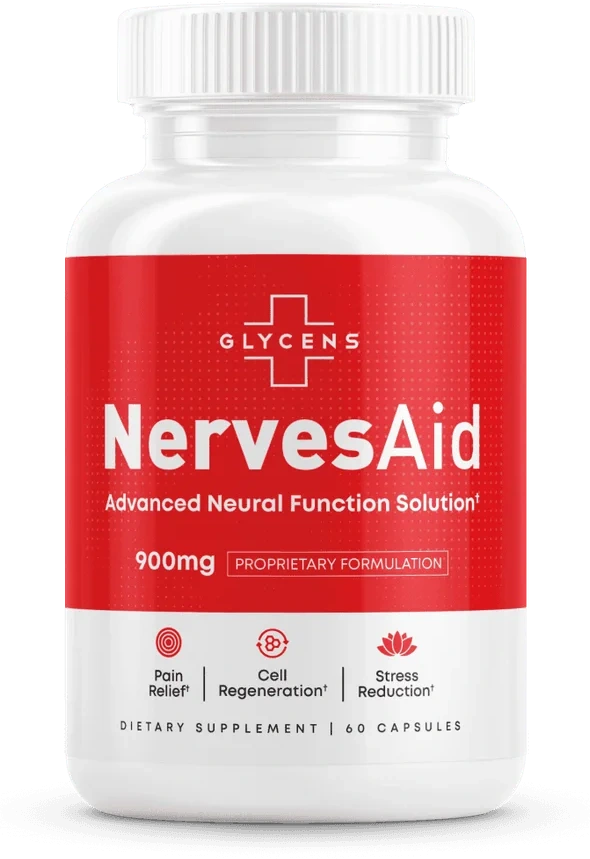
In a modern formula, passion flower rarely travels alone. In NervesAid, for example, it sits alongside four other botanicals in a once-daily capsule, so the plant’s traditional calming role is combined with complementary herbs rather than relied on in isolation. If you want the wider picture of how a plant-first routine fits together, our guide on how to support nerve health naturally puts the botanicals in context alongside sleep, food and movement.
Dosage is the question everyone asks and the one that deserves the most careful answer, because there is no single “correct” number. The amount depends entirely on the form and concentration of the preparation:
Because of this, the single most reliable rule is simple: follow the dose printed on the product you actually own, and do not assume a number you read for one preparation applies to another. Passion flower is also traditionally taken later in the day given its calming reputation, so many people pair it with an evening routine. And as with any botanical, consistency over a steady few weeks tells you far more than a single serving.
Speak with a physician before starting passion flower if you are pregnant, nursing, under 18, taking medication (especially sedatives or anything affecting the nervous system), or scheduled for surgery. Gentle does not mean irrelevant — it still deserves a professional’s input alongside your own judgement.
NervesAid™ combines passion flower with California poppy, corydalis, marshmallow root and prickly pear in one plant-based capsule — a 900 mg daily blend backed by a 60-day money-back guarantee.
See NervesAid PackagesReading a label well is where an ingredient guide becomes genuinely useful. Here is exactly what to check before you trust a passion flower product:
If you want a broader framework for reading any nerve-support product, our companion guide on how to read a nerve supplement label walks through blends, fillers and standardization line by line.
Passion flower is a natural team player. In traditional practice it is frequently paired with other gentle nervines — most famously California poppy, which shares a calming, evening-friendly reputation. If you are weighing up which of these plants suits you, our head-to-head on corydalis vs California poppy explains how each botanical is thought to work and where they overlap. The short version: these plants are complementary rather than competing, which is why blends combine them. Two neighbours are worth knowing: ashwagandha, which works on the stress-response side rather than the sedative side, and marshmallow root, which contributes texture and a soothing mucilage rather than a calming alkaloid.
A quick word of caution that follows directly from the mechanism above: because these botanicals lean in the same calming direction, combining several at full amounts can add up. That is an argument for using a thoughtfully balanced blend at labeled doses rather than stacking multiple standalone products on your own.
Most people do best giving a botanical routine a steady few weeks — so the multi-bottle NervesAid™ packs are the better value. Choose your supply and let the routine settle in.
Order NervesAid Multi-Packs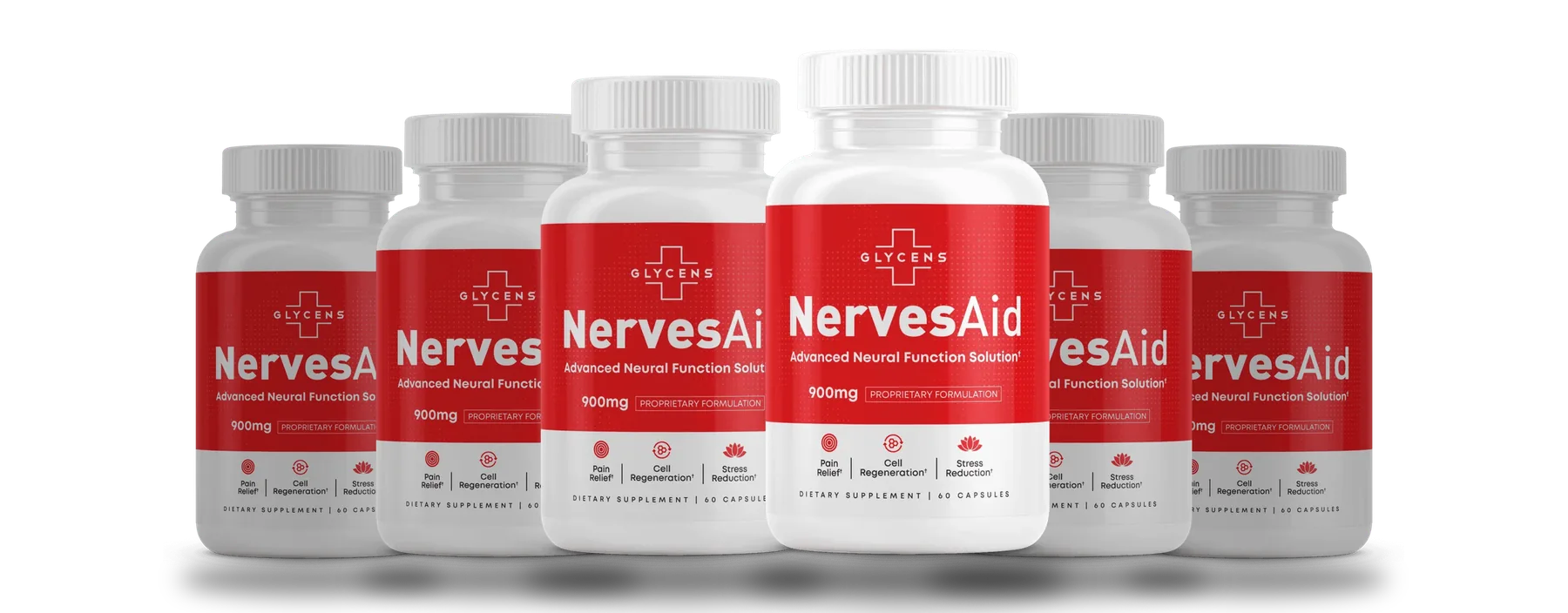
Passion flower (Passiflora incarnata) contains plant compounds called flavonoids that researchers believe interact with GABA, a calming chemical messenger in the nervous system. By gently supporting GABA activity, passion flower is traditionally used to encourage relaxation and a settled, comfortable feeling rather than to sedate or override how you feel.
Traditional and study-based use varies widely by preparation. Dried aerial parts are often used as a tea, while standardized extracts appear in capsules and tinctures at much smaller amounts. Always follow the dose printed on the product you own and speak with a physician before starting, since strength depends on how the extract is concentrated.
No. Passion flower is traditionally valued for the opposite reason — it is used to support calm and easier evenings, not alertness. It contains no caffeine and is not a stimulant.
Look for the full botanical name Passiflora incarnata, the plant part used, whether the extract is standardized, the amount per serving, and third-party or GMP quality markers. A transparent label tells you exactly what you are taking rather than hiding it inside a vague blend.
Passion flower is often combined with herbs such as California poppy and corydalis in traditional blends, including NervesAid. Because combined effects can add up, keep to labeled amounts and check with your physician first, especially if you take medication or already use a sleep or calming product.
† These statements have not been evaluated by the Food and Drug Administration. This product is not intended to diagnose, treat, cure or prevent any disease. This article is for general information only and is not medical advice.