
| Corydalis | Traditionally used for everyday comfort and ease; contains alkaloids such as tetrahydropalmatine (THP). |
| California poppy | Traditionally used for relaxation and restful sleep; a gentle golden wildflower, not the opium poppy. |
| Same family? | Yes — both belong to the poppy family (Papaveraceae) but are different plants with different roles. |
| Better together? | Usually. They are complementary, which is why calming blends combine them rather than choosing one. |

Corydalis and California poppy show up side by side in many calming herbal blends, and that closeness leads to a fair question: if a formula already contains one, why include the other? The honest answer is that they are not interchangeable. They come from the same botanical family and share a gentle, evening-friendly reputation, but they occupy different roles and rest on different plant chemistry. This guide compares the two head to head — how each is thought to work, what traditions use them for, and how to read them on a label — so you can understand a blend instead of guessing at it.
Before comparing, it helps to know exactly what each botanical is, because names in the herbal world can be slippery. California poppy’s traditional reputation was first put to a behavioural test by Rolland and colleagues, whose 1991 Planta Medica paper reported sedative and anxiolytic properties in animals (PubMed 1680240).
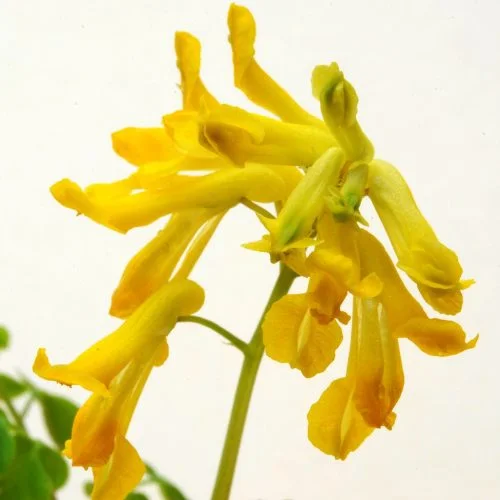
Corydalis is a genus of delicate flowering plants in the poppy family. The species used in the NervesAid blend, Corydalis lutea, is a hardy perennial with fern-like foliage and small yellow blooms. Corydalis has a long history in traditional herbal practice, where it has been valued for supporting the body’s sense of comfort and ease. Its interest to modern researchers comes largely from a group of plant alkaloids it contains — most notably tetrahydropalmatine, usually shortened to THP.
California poppy (Eschscholzia californica) is the bright golden state flower of California, a cheerful wildflower that carpets hillsides in spring. Despite the name, it is not the opium poppy (Papaver somniferum) and does not share its compounds — a distinction worth making clearly, because it is the single most common misunderstanding about this plant. California poppy has been used traditionally to support relaxation and peaceful, restful sleep, and it is generally regarded as a gentle, everyday-friendly botanical.
This is where the “vs” gets interesting, because the two plants lean on different chemistry even though they end up in similar blends. Most of the laboratory work on Corydalis concerns the related species Corydalis yanhusuo rather than the Corydalis Lutea used in botanical blends: Xu and colleagues attributed its analgesic effect to inhibition of voltage-gated sodium channels in Journal of Ethnopharmacology, 2021 (PubMed 34329712).
Corydalis owes its traditional reputation largely to isoquinoline alkaloids, especially tetrahydropalmatine (THP). Researchers have studied THP for the way it interacts with the nervous system’s signalling pathways, including dopamine-related activity. In plain terms, corydalis is associated with supporting a comfortable, settled baseline — which is why traditional practice reaches for it as a comfort-and-ease herb rather than a straightforward sleep aid.
California poppy contains its own set of gentle alkaloids and is often discussed in the same breath as the GABA calming system that other relaxing botanicals influence. Its traditional niche is squarely relaxation and restful nights. If passion flower is the classic “quiet the mind” herb, California poppy is its close companion for easing into sleep. You can read more about that GABA calming pathway in our guide to passion flower for nerve health, which shares the same underlying theme.
The practical takeaway from the mechanisms is this: corydalis and California poppy are not two versions of the same tool. One leans toward everyday comfort, the other toward restful sleep, and their different alkaloid profiles are the reason they can complement rather than duplicate each other in a formula.
| Corydalis | California poppy | |
|---|---|---|
| Botanical name | Corydalis lutea | Eschscholzia californica |
| Plant family | Poppy family (Papaveraceae) | Poppy family (Papaveraceae) |
| Key compounds | Alkaloids incl. tetrahydropalmatine (THP) | Gentle poppy alkaloids (not opium) |
| Traditional role | Everyday comfort & ease | Relaxation & restful sleep |
| Best for | A settled, comfortable baseline | Easing into a peaceful night |
Seen this way, “which is better?” turns out to be the wrong question. The better question is “better for what?” — and the answer usually points toward using both.
If you are shopping for a single standalone herb, let your goal decide. Lean toward California poppy if your main interest is winding down and supporting restful evenings. Lean toward corydalis if you are looking for support with everyday comfort and a settled feeling through the day. But for most people, the more sensible approach is not to pick a side at all. In a five-plant blend the choice is usually moot, because both appear alongside quieter companions such as marshmallow root, which is there for soothing rather than for calm.
That is because the two plants pull in complementary directions. A thoughtfully built blend can pair corydalis’s comfort-and-ease role with California poppy’s restful-sleep role, and then round the pair out with other calming botanicals. That is exactly the logic behind NervesAid, which brings both plants together with passion flower, marshmallow root and prickly pear in a single once-daily capsule — so you get the complementary pairing without having to buy, measure and time several separate products yourself.
For the bigger picture of how these botanicals sit within an everyday routine, alongside sleep and nutrition, see our overview of how to support nerve health naturally.
NervesAid™ combines corydalis and California poppy with three more calming botanicals — a 900 mg plant-based blend in one daily capsule, backed by a 60-day money-back guarantee.
See NervesAid PackagesBecause both plants are members of the poppy family and both are sometimes described loosely, label reading matters more here than with almost any other calming botanical: Species and alkaloid content vary widely between commercial products — Chauveau and colleagues quantified the alkaloids across commercial California poppy preparations in Biomedicine & Pharmacotherapy, 2023 (PubMed 37673017).
For a full walkthrough of blends, standardization and fillers across any nerve product, see our guide on how to read a nerve supplement label.
Both botanicals are traditionally regarded as gentle, but gentle is not the same as inconsequential. Because they lean in a calming, evening-friendly direction, they can add to the effects of sedatives or other calming products. Speak with a physician before starting either plant if you are pregnant, nursing, under 18, managing a health condition or taking medication. And as with all botanicals, give any routine a steady few weeks of consistent use before judging how it suits you — these plants build a baseline rather than deliver an instant result.
Consistency is what makes a botanical routine worthwhile — so the multi-bottle NervesAid™ packs give you an uninterrupted supply at the best value.
Order NervesAid Multi-Packs
Both are flowering plants in the poppy family used in calming herbal traditions, but they are valued for slightly different roles. Corydalis is traditionally associated with supporting the body’s sense of comfort and ease, while California poppy is best known for encouraging relaxation and restful sleep. They contain different plant alkaloids and are often combined rather than used as substitutes.
Corydalis contains plant alkaloids such as tetrahydropalmatine (THP) that researchers have studied for their interaction with the nervous system’s signalling pathways. In traditional practice it is used to support everyday comfort and a settled feeling, taken consistently as part of a wider routine rather than for a fast effect.
No. California poppy (Eschscholzia californica) is a different plant from the opium poppy (Papaver somniferum). California poppy is a gentle golden wildflower traditionally used to support calm and restful sleep and does not contain the same compounds as the opium poppy.
Yes — they are frequently combined in traditional calming blends, including NervesAid, because their roles complement each other. As always, stick to labeled amounts and speak with a physician first if you are pregnant, nursing, under 18 or taking medication.
California poppy is the botanical more traditionally associated with restful, peaceful sleep, while corydalis leans toward everyday comfort and ease. Many people find the combination more useful than either alone, which is why blends pair them.
† These statements have not been evaluated by the Food and Drug Administration. This product is not intended to diagnose, treat, cure or prevent any disease. This article is for general information only and is not medical advice.