
| What it is | Althaea officinalis — a mucilage-rich root used for centuries as a soothing botanical. |
| How it works | Large polysaccharides form a slippery gel (mucilage) that coats and comforts tissues. |
| Its role | A gentle, demulcent supporting herb — not a sedative — that complements calming botanicals. |
| Good to know | Its gel can slow absorption of other pills, so it is often spaced apart from them. |
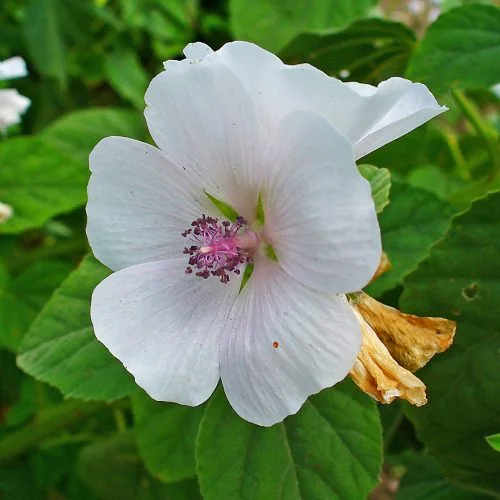
Marshmallow root for nerve health is a question that surprises people, because the plant is better known for soothing throats than for supporting nerves. Yet Althaea officinalis earns its place in modern botanical blends for a specific reason: it is a classic demulcent, a soothing herb rich in a gel-like fibre called mucilage. This guide explains what marshmallow root actually is, the polysaccharide chemistry behind its comforting reputation, the supporting role it plays alongside calming botanicals, and exactly what to check on a label so you know you are getting the real thing.
Marshmallow root comes from Althaea officinalis, a tall, pink-flowered plant native to Europe and parts of Asia that thrives in damp, marshy ground — hence the name. Despite the shared word, it has nothing to do with the modern campfire confection, which long ago swapped the plant for gelatine and sugar. What herbalists have prized for more than two thousand years is the root itself, which is unusually rich in mucilage — a soft, gel-forming fibre that gives the root its characteristic slippery, soothing quality. Hage-Sleiman and colleagues carried out a pharmacological evaluation of an aqueous Althaea officinalis extract in Pharmaceutical Biology, 2011 (PubMed 21281251).
In the language of traditional herbalism, marshmallow root is a demulcent: a plant that soothes and coats. That single word captures most of what it does. Rather than stimulating or sedating the body, it forms a gentle, protective film over the surfaces it touches. This is why it has been used traditionally to comfort the throat, the digestive lining and other tissues, and why it now appears as a supporting player in blends aimed at everyday comfort.
The mechanism is refreshingly straightforward and genuinely physical. Marshmallow root is packed with large sugar molecules called polysaccharides. When these meet water, they swell and knit together into a viscous, slippery gel — the mucilage. That gel is not absorbed and does not act like a drug; instead it works by contact, coating surfaces to create a soothing, protective layer. It is a demulcent action, plain and simple, and it is the reason marshmallow root has such a long, consistent reputation for comfort. Rownaghi and colleagues characterised the physical behaviour of the polysaccharide mucilage extracted from marshmallow root in the International Journal of Biological Macromolecules, 2024 (PubMed 39094881) — a demulcent effect on surfaces it touches, not a nerve mechanism.
Because the mucilage is water-soluble and can be broken down by heat, the way you prepare marshmallow root matters. A traditional preparation is a cold infusion — steeping the dried root in cool water for several hours — which preserves more of the gel than a hot tea would. In capsules and extracts, that preparation is handled for you, and the root is measured by weight or as a standardised extract.
Here is the honest framing, because it matters. Marshmallow root is not a classic calming nerve herb in the way that passion flower or California poppy are. It does not act on the nervous system’s signalling pathways. Instead, it plays a supporting role: a gentle, comforting, demulcent presence that rounds out a blend built around calming botanicals. Think of it as the soothing backdrop rather than the lead actor. Its closest companion in that respect is prickly pear, another plant included for its broader nutritional profile rather than for a calming alkaloid.
That is exactly how the NervesAid formula uses it — as one of five plant-based botanicals, adding a comforting, soothing quality alongside the calming herbs that do the heavier lifting on the relaxation side. To see how those calming botanicals work, our guide to passion flower for nerve health explains the GABA pathway, and our corydalis vs California poppy comparison covers the two poppy-family calmatives. Marshmallow root complements them rather than competing.
| Property | Marshmallow root |
|---|---|
| Herbal category | Demulcent (soothing), not a sedative or stimulant |
| Main actives | Mucilage polysaccharides |
| Traditional use | Soothing the throat, digestive and other linings |
| Role in a blend | A gentle, comforting supporting botanical |
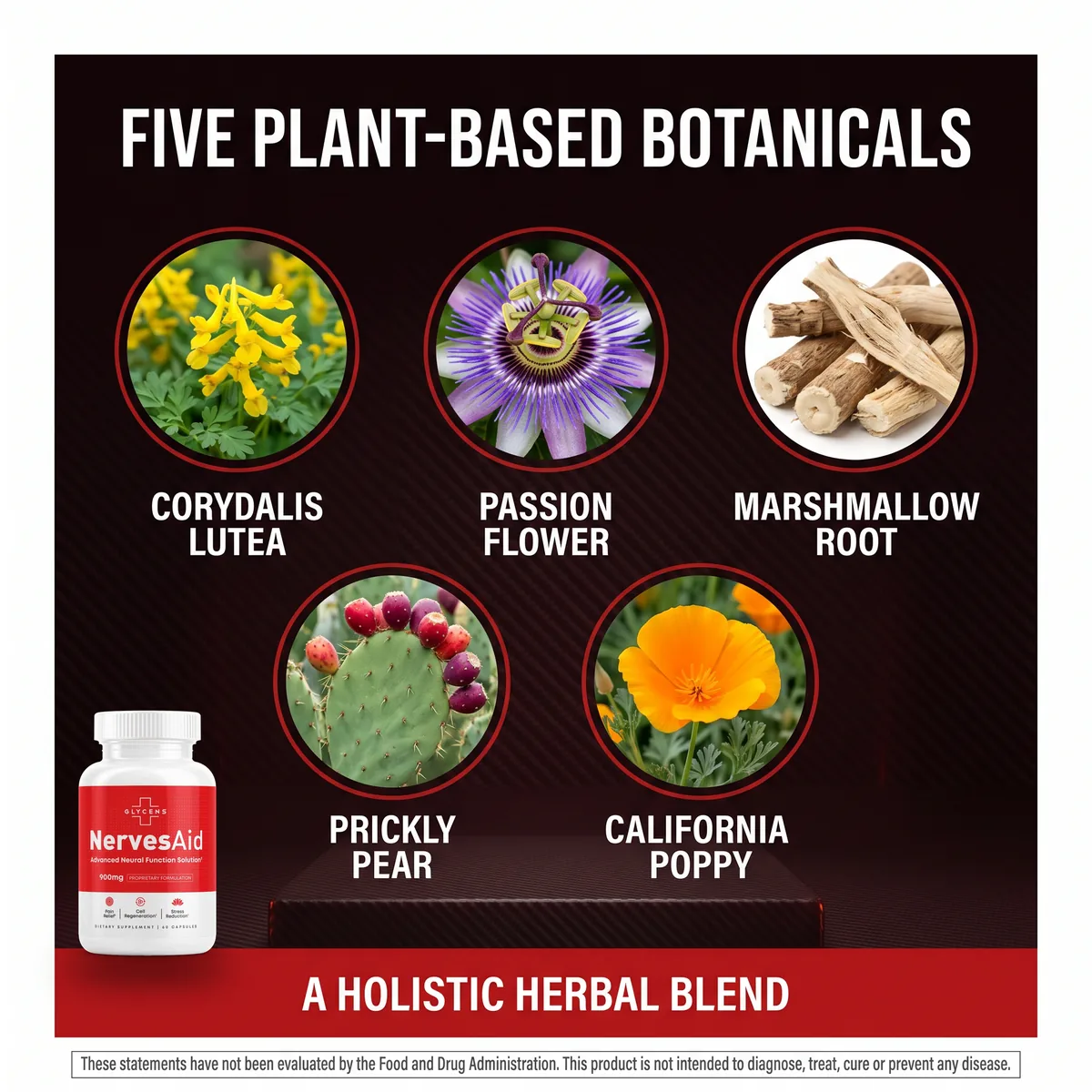
Blends exist because whole-plant botanicals tend to work best in company. A soothing demulcent, a couple of calming herbs and an antioxidant-rich plant each bring something different, which is why thoughtful formulas combine them instead of leaning on a single ingredient.
NervesAid™ brings marshmallow root together with four more plant-based botanicals in one easy, once-a-day capsule — backed by a 60-day money-back guarantee.
See NervesAid Packages
You will find marshmallow root in several forms, each with its own quirks:
One practical note applies to all of them: because marshmallow root’s mucilage can coat the gut and physically slow absorption, it is sensible to space it apart from other supplements or medicines — typically by an hour or two — so it does not blunt their uptake. In a once-daily blend this is rarely an issue at the modest amounts used, but it is worth knowing if you take marshmallow root separately.
If proprietary blends and extract ratios are new to you, our walkthrough on how to read a nerve supplement label breaks down every line of a supplement facts panel so nothing on the back of the bottle is a mystery.
Marshmallow root is widely regarded as one of the gentler botanicals, and it is generally well tolerated. Its most notable practical consideration is the absorption point above — its mucilage can slow the uptake of other things taken at the same moment, which is why spacing helps. Beyond that, the usual sensible rules apply: if you are pregnant, nursing, under 18, taking medication or managing a health condition, talk with a physician before adding any new botanical. This is general educational information about a traditional-use herb, not medical advice, and marshmallow root is intended to support a healthy lifestyle rather than to treat anything. The NIH Drugs and Lactation Database (LactMed) monograph on marshmallow notes how little data exists for use in pregnancy and breastfeeding, which is reason enough to skip it then.
Consistency is where a botanical routine pays off. The multi-bottle NervesAid™ packs keep your once-a-day step stocked — at the best per-bottle value, with free shipping on larger orders.
Order NervesAid Multi-Packs
Marshmallow root (Althaea officinalis) has been used in traditional herbalism for centuries as a soothing, or demulcent, botanical. It is rich in mucilage, a gel-like fibre that coats and comforts tissues. Traditionally it has been valued for soothing the throat and digestive lining, and in modern blends it is often included as a gentle, comforting botanical alongside calming herbs.
Its main active components are large sugar molecules called polysaccharides, which form a slippery mucilage when mixed with water. This mucilage physically coats surfaces and is the basis of marshmallow root’s traditional soothing reputation. It is a demulcent action rather than a stimulant or sedative one.
Marshmallow root is best described as a soothing, comforting botanical rather than a classic calming nerve herb. In a nerve-support blend it plays a supporting role, adding a gentle, demulcent quality that complements the calming botanicals such as passion flower and corydalis. It is not a sedative.
It is available as a dried root for tea, as capsules, and as extracts. Because its mucilage is water-soluble and can be affected by heat, cold infusions are a traditional preparation. In supplements it is usually standardised or measured by weight; follow the label for the serving size.
Marshmallow root is generally regarded as gentle and well tolerated. Because its mucilage can coat the gut, it may slow the absorption of other supplements or medicines taken at the same time, so it is often spaced apart from them. As with any botanical, speak with a physician if you are pregnant, nursing, taking medication or managing a health condition.
† These statements have not been evaluated by the Food and Drug Administration. This product is not intended to diagnose, treat, cure or prevent any disease. This article is for general information only and is not medical advice.