
| What it is | The fruit and pads of the Opuntia cactus — a hardy desert plant eaten as food for centuries. |
| Key compounds | Betalain pigment antioxidants, plus vitamin C, flavonoids and soluble fibre. |
| Why nerves | Antioxidants help keep oxidative stress in balance in busy, energy-hungry nerve cells. |
| Its role | An antioxidant-rich supporting botanical — not a stimulant or sedative. |
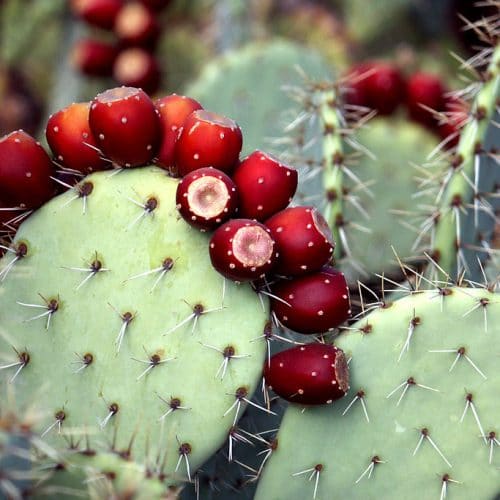
Prickly pear for nerve health is a topic that rewards curiosity, because this spiny desert cactus is far more interesting than its thorns suggest. Known botanically as Opuntia, prickly pear is packed with a rare class of pigment antioxidants called betalains, along with vitamin C, flavonoids and soluble fibre. This guide explains what prickly pear actually is, how its antioxidant chemistry connects to nerve health, the specific role it plays in a botanical blend, and what to look for on a label so you get a genuine, well-made extract.
Prickly pear is the edible fruit — and, in many cuisines, the flat green pads, or nopales — of the Opuntia cactus. Native to the Americas and now cultivated across Mexico, the Mediterranean, North Africa and beyond, it is a genuinely tough plant that thrives where little else will. That resilience is not just trivia: plants that survive intense sun and drought tend to build up protective compounds, and prickly pear is a good example. It has been eaten as a food and valued in traditional wellness for centuries, from jams and juices to the pads served as a vegetable. Giraldo-Silva and colleagues catalogue its phytochemistry and the pharmacological work done so far in a 2023 systematic review in Plants (PubMed 36771630).
In a supplement, prickly pear usually appears as a concentrated extract of the fruit or the pads, capturing those protective plant compounds in a convenient form. That is how it turns up in nerve-support and general-wellness blends — not as the fresh fruit, but as a standardised extract measured for consistency.
The nerve-health angle is an antioxidant story, and it starts with a fact worth repeating: nerve cells are among the busiest, most energy-demanding cells in the body. All that activity produces reactive molecules, and part of staying healthy is keeping that oxidative stress in balance. Antioxidants from a varied, colourful diet help the body do exactly that — and prickly pear is an unusually rich source of them. The most concrete finding is vascular rather than neurological: Gentile and colleagues showed that betalains from cactus pear inhibit endothelial ICAM-1 expression in Annals of the New York Academy of Sciences, 2004 (PubMed 15650274).
Its standout compounds are betalains, the natural pigments responsible for the fruit’s vivid magenta, red and yellow hues. Betalains are relatively rare in the plant kingdom — you also find them in beetroot — and they are studied specifically for their antioxidant behaviour. On top of the betalains, prickly pear supplies vitamin C, flavonoids and betacyanins, a small antioxidant team rather than a single hero compound. It also contains soluble fibre, which is part of why it features in general metabolic and digestive wellness too.
Let us be precise and compliant about what this means. Providing antioxidant plant compounds is a general, supportive idea — supporting the body’s own balance — not a claim that prickly pear treats or cures anything. It is the same measured framing we use for the metabolic antioxidant alpha-lipoic acid; if you want to compare a plant-pigment antioxidant with a made-in-the-body one, our guide to alpha-lipoic acid for nerve health is a natural next read.
Why single out betalains? Their chemistry is the reason. These nitrogen-containing pigments have a molecular structure that lets them donate electrons to unstable, reactive molecules, effectively calming them down before they can do damage. That is the essence of antioxidant activity. Because betalains are water-soluble and vividly coloured, they are also easy to identify and measure, which helps with consistent supplement standardisation. Smeriglio and colleagues characterised the antioxidant and cytoprotective properties of those betalains in Phytotherapy Research, 2019 (PubMed 30907039). The same absorption question that dogs every plant polyphenol applies here, and it is set out most clearly in our guide to curcumin and bioavailability.
No single antioxidant works alone, though. In the body, antioxidants operate as a network, each covering different environments and regenerating one another — a theme we explore in the alpha-lipoic acid guide above. Prickly pear’s contribution is a plant-derived layer of that network, delivered alongside fibre and vitamin C, which is exactly why it sits comfortably in a whole-plant botanical blend rather than as a stand-alone megadose.
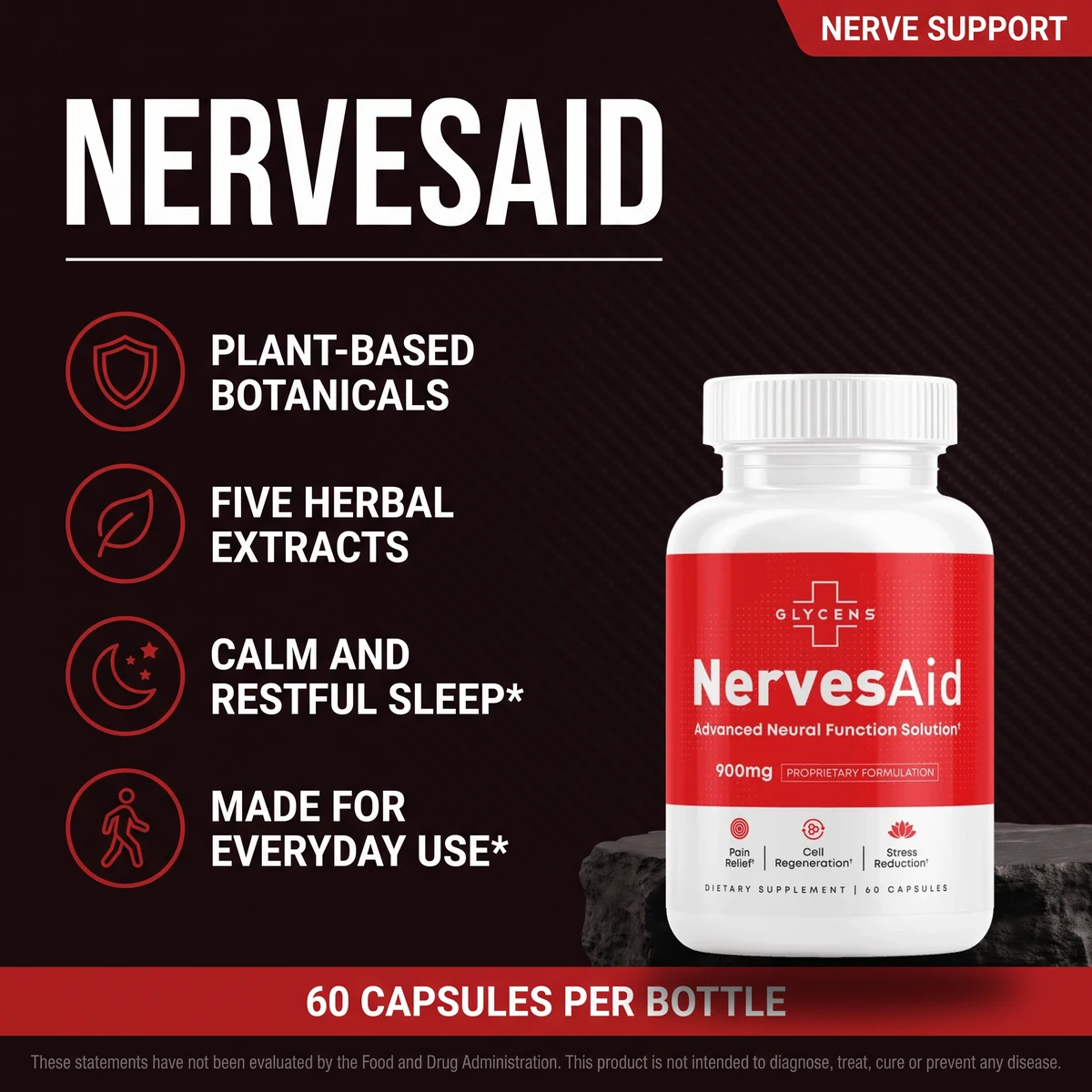
The NervesAid formula uses prickly pear as one of five plant-based botanicals, pairing its antioxidant-rich profile with calming herbs. Many people treat a colourful, antioxidant-rich diet and a botanical blend as two halves of the same everyday routine — a pattern we lay out in our overview of how to support nerve health naturally.
NervesAid™ combines prickly pear with four more plant-based botanicals in one easy, once-a-day capsule — backed by a 60-day money-back guarantee.
See NervesAid Packages
| Property | Prickly pear (Opuntia) |
|---|---|
| Plant type | Hardy desert cactus; fruit and pads eaten as food |
| Signature compounds | Betalain pigments (antioxidants) |
| Also provides | Vitamin C, flavonoids, soluble fibre |
| Role in a blend | Antioxidant-rich supporting botanical |
In a multi-botanical nerve formula, prickly pear is included at a measured amount as part of the blend, so you do not have to dose it yourself — the label handles that. If you take it on its own, follow the product’s serving size and start conservatively.
For a line-by-line guide to extract ratios, standardisation and proprietary blends on any product, see how to read a nerve supplement label.
Prickly pear has a long history as a food, and as a supplement it is generally well tolerated. Its fibre content means very large amounts can occasionally cause mild digestive changes. Because some traditional uses relate to blood sugar and metabolism, anyone taking medication that affects blood sugar should be especially mindful and consult a physician. As always, if you are pregnant, nursing, under 18, taking medication or managing a health condition, get personalised advice before starting. This article is general education about a traditional-use plant food and is not medical advice.
Antioxidant support works best day after day. The multi-bottle NervesAid™ packs keep your once-a-day step stocked — at the best per-bottle value, with free shipping on larger orders.
Order NervesAid Multi-Packs
Prickly pear is the fruit and pads of the Opuntia cactus, a hardy desert plant native to the Americas and now grown across the Mediterranean and beyond. It has been eaten as a food and used in traditional wellness for centuries. In supplements it usually appears as an extract of the fruit or pads.
Prickly pear is rich in antioxidant plant compounds, especially pigments called betalains, along with vitamin C and flavonoids. Antioxidants help the body keep oxidative stress in balance, and nerve cells are especially active and energy-hungry. Prickly pear also provides soluble fibre. Its role in a nerve blend is as an antioxidant-rich supporting botanical rather than a sedative.
Betalains are the natural pigments that give prickly pear and beetroot their vivid red, purple and yellow colours. They are studied as antioxidants because their chemical structure lets them neutralise reactive molecules. They are relatively unusual in the plant world, which is part of what makes prickly pear distinctive.
Neither. Prickly pear is a nutrient- and antioxidant-rich plant food, not a stimulant or a sedative. In a nerve-support blend it contributes antioxidant compounds and fibre, complementing the calming botanicals rather than acting on the nervous system directly.
It is available as a fruit or pad extract in capsules, as a powder, and as a juice. In multi-botanical blends it is typically standardised or measured by weight. Follow the label for the serving size, and choose products that name the plant part and the extract ratio.
† These statements have not been evaluated by the Food and Drug Administration. This product is not intended to diagnose, treat, cure or prevent any disease. This article is for general information only and is not medical advice.