
| The key players | B1 (thiamine), B6 (pyridoxine) and B12 (cobalamin), with folate (B9) supporting. |
| What they do | Act as coenzymes for nerve-cell energy, neurotransmitter synthesis and myelin upkeep. |
| Best source | A varied diet first — whole grains, legumes, greens, eggs, dairy, fish and meat. |
| On the label | Named forms (e.g. methylcobalamin), sensible amounts, and no needless megadoses. |
Ask which nutrients matter most for nerve function and the B vitamins come up almost immediately — and for good reason. This family of water-soluble vitamins sits at the centre of how nerve cells make energy, build the chemical messengers that carry signals, and maintain the insulation that keeps those signals fast and clean. This guide explains how B vitamins support nerve function at a cellular level, which ones matter most, where to get them, and how to read a B-vitamin label without falling for the “more is better” trap.
Nerves are among the most energy-hungry and signal-intensive cells in the body. Every message you feel, every reflex, every calm or alert moment is the product of nerve cells firing, recovering and firing again — thousands of times over. Running that machinery requires a steady supply of helper molecules called coenzymes, and several B vitamins are exactly that. Without enough of them, the reactions nerves depend on simply run less smoothly.
Because B vitamins are water-soluble, the body does not store large reserves the way it stores fat-soluble vitamins. That means a regular, dietary supply matters. It also means the conversation about B vitamins and nerve function is really a conversation about consistency — keeping levels topped up day to day — rather than about occasional large doses.
There are three main jobs the B vitamins do for your nervous system. Understanding them turns a vague “B vitamins are good for nerves” into something you can actually reason about.
Nerve cells need a constant stream of energy in the form of ATP. Several B vitamins — thiamine (B1), riboflavin (B2), niacin (B3) and others — act as coenzymes in the metabolic pathways that convert food into that usable energy. Thiamine in particular is closely tied to how nerve tissue handles glucose, which is why it has such a long-standing association with nerve health.
Nerves talk to one another using chemical messengers called neurotransmitters. Vitamin B6 (pyridoxine) is a required coenzyme in making several of them, including those involved in mood and calm. Folate (B9) and B12 also feed into the biochemical cycles that keep neurotransmitter production running. This is the mechanistic link between B vitamins and the day-to-day feeling of a balanced, well-regulated nervous system.
Many nerves are wrapped in myelin, a fatty insulating layer that lets electrical signals travel quickly and cleanly — think of it as the insulation on a wire. Vitamin B12 is essential for maintaining healthy myelin, which is why a genuine B12 shortfall is so strongly associated with nerve symptoms. Keeping B12 adequate is one of the clearest, best-established connections between a single nutrient and nerve function.
These four are frequently discussed together as a “neurotropic” group because their roles overlap and reinforce one another. That interdependence is a big reason B vitamins are often taken as a balanced B-complex rather than in isolation — a shortfall in one can make the others less effective. Patel and colleagues set out how a B12 shortfall presents and how it is confirmed in “Vitamin B12 Deficiency: Common Questions and Answers,” American Family Physician, 2025 (PubMed 40961307). B1 is the one where the form on the label changes the answer, which is why we compare benfotiamine and ordinary thiamine in a guide of its own.
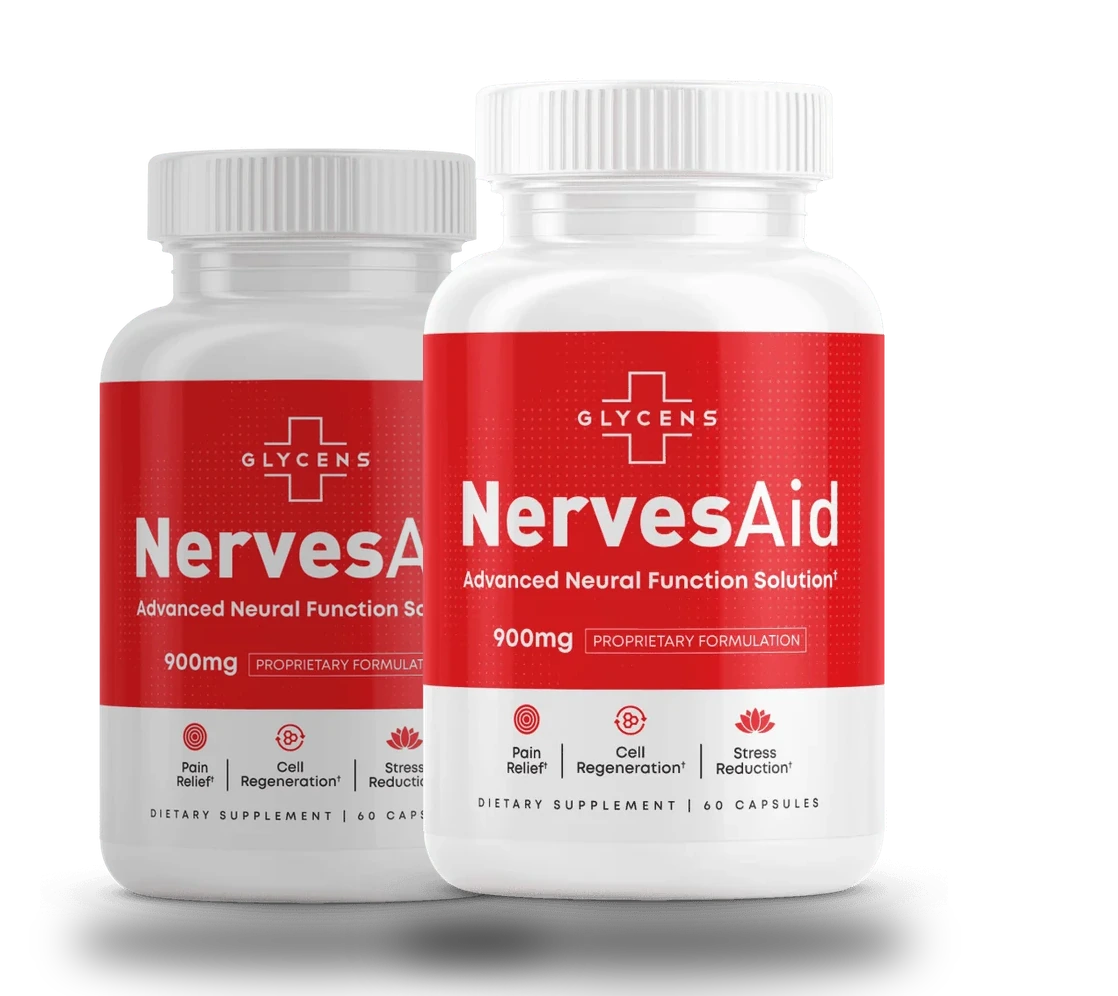
It is worth being clear about where a botanical blend fits in this picture. NervesAid is a plant-based formula built around calming botanicals rather than a B-complex — the two approaches answer different needs. B vitamins are best obtained from a varied diet or a dedicated supplement where diet falls short, while a botanical blend supports everyday calm and comfort. Many people think of them as complementary parts of a wider routine, which is exactly the framing in our guide to how to support nerve health naturally.
For most people, food does the heavy lifting. The B vitamins are widespread across everyday whole foods: Food sources and absorption are detailed in the NIH Office of Dietary Supplements vitamin B12 fact sheet for health professionals. Two nutrients that sit close to the B group in most nerve formulas are worth reading about separately: acetyl-L-carnitine, which the body builds from amino acids with B6 as a helper, and vitamin D and nerve health, which behaves less like a vitamin than a hormone.
The main exception worth flagging is B12, which is found almost entirely in animal foods. People following strict plant-based diets, and some older adults whose bodies absorb B12 less efficiently, are the groups most likely to fall short — and the ones for whom fortified foods or a supplement can make the biggest difference. This is a place where a targeted approach genuinely helps, rather than blanket supplementation for everyone.
Alongside a nutrient-rich diet, NervesAid™ adds five calming botanicals in one plant-based daily capsule — a simple, once-a-day step, backed by a 60-day money-back guarantee.
See NervesAid PackagesThis is where an ingredient guide earns its keep, because B-vitamin labels are a common place for marketing to outrun sense. Here is what actually matters: The upper limit that makes this more than a technicality is set out in the NIH Office of Dietary Supplements vitamin B6 fact sheet, because sustained high-dose B6 is itself a recognised cause of nerve symptoms.
The “more is better” instinct is precisely the trap to avoid with B vitamins. Because they are water-soluble, excess amounts of most are simply excreted — but a few, notably B6, can build up and cause problems at high long-term doses. For a broader framework that applies to any nerve product, botanical or vitamin, see our guide on how to read a nerve supplement label.
B vitamins from food are safe and beneficial for essentially everyone. Supplements are useful in the right context — a diagnosed shortfall, a restrictive diet, or reduced absorption — but they are not a fix for symptoms that need a diagnosis. Persistent numbness, tingling, burning or weakness deserves a proper medical assessment, partly because a genuine B12 deficiency is treatable once identified. If you are pregnant, nursing, under 18, managing a condition or taking medication, check with your physician before starting any supplement, and do not self-treat suspected deficiency with megadoses.
Consistency is what makes any nerve routine pay off. The multi-bottle NervesAid™ packs keep your daily botanical step going without interruption — at the best per-bottle value.
Order NervesAid Multi-Packs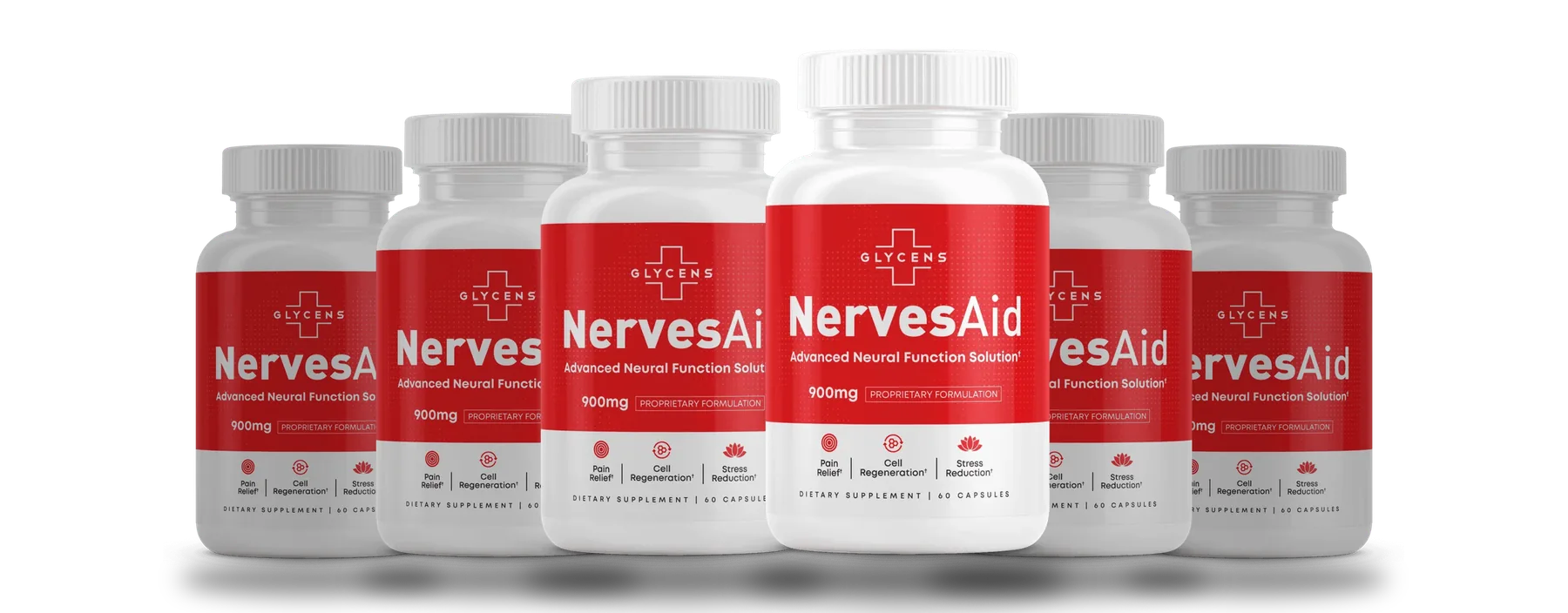
B1 (thiamine), B6 (pyridoxine) and B12 (cobalamin) are the B vitamins most closely tied to healthy nerve function, with folate (B9) also playing a supporting role. B12 and B1 help maintain the myelin sheath and nerve energy metabolism, while B6 is involved in making neurotransmitters.
B vitamins act as coenzymes — helper molecules the body uses to run essential reactions. They contribute to energy production inside nerve cells, the synthesis of neurotransmitters that carry nerve signals, and the maintenance of myelin, the insulating layer that helps signals travel efficiently.
A varied diet supplies most B vitamins — whole grains, legumes, leafy greens, eggs, dairy, fish and meat are all good sources. B12 is found mainly in animal foods, so people following plant-based diets, and some older adults who absorb it less efficiently, may benefit from a supplement or fortified foods.
Look for the specific forms (for example methylcobalamin for B12), the amount per serving relative to the Daily Value, and whether the product avoids megadoses you do not need. More is not automatically better — B6 in particular has an upper limit, so sensible amounts matter.
Not always. Some nerve-support products are vitamin-based, others are botanical blends, and some combine both. NervesAid is a plant-based botanical blend; B vitamins are best obtained from a varied diet or a dedicated B-complex where diet falls short.
† These statements have not been evaluated by the Food and Drug Administration. This product is not intended to diagnose, treat, cure or prevent any disease. This article is for general information only and is not medical advice.