
| What it does | A cofactor in hundreds of reactions; helps regulate the mineral flow behind nerve and muscle signalling and relaxation. |
| Best forms | Glycinate for calm and tolerance; citrate well-absorbed; oxide cheap but poorly absorbed. |
| The key number | Elemental magnesium — the mineral you actually absorb, not the compound weight. |
| Best source | Food first: greens, nuts, seeds, legumes, whole grains. |

Magnesium is one of the most talked-about minerals for calm and nerve health — and one of the most confusingly labelled. Two products can both say “magnesium 500 mg” and deliver wildly different amounts of the mineral your body can actually use. This guide explains how magnesium supports nerve function, compares the common forms you will see on a shelf, and shows you the single number on the label that matters most, so you can choose sensibly instead of by price alone.
Magnesium is a true workhorse mineral. The body uses it as a cofactor in hundreds of enzyme reactions — everything from energy production to protein building to the regulation of other minerals. For the nervous system specifically, its importance comes down to one central theme: electrical signalling. Nerves and muscles fire by moving charged minerals such as calcium, sodium and potassium across their membranes, and magnesium helps keep that traffic orderly. This is why magnesium is officially associated with normal nerve and muscle function and with the feeling of relaxation. Kirkland and colleagues set out the mineral’s role across the nervous system in “The Role of Magnesium in Neurological Disorders,” Nutrients, 2018 (PubMed 29882776).
There is a specific mechanism worth naming here, because it explains the calm connection people ask about. Magnesium interacts with the NMDA receptor, a gateway involved in the nervous system’s excitatory (activating) signalling. By sitting at that gateway, magnesium helps moderate over-excitation — in plain terms, it helps the nervous system avoid running too hot. That moderating role is the mechanistic thread connecting magnesium to relaxation and settled evenings.
Put the pieces together and the story is coherent. Magnesium helps regulate the mineral flow behind nerve and muscle signalling, it interacts with an excitatory gateway to keep activation in check, and it participates in the energy reactions nerve cells depend on. None of this makes magnesium a sedative — it is a mineral your body needs to function normally, not a substance that switches you off. But maintaining an adequate supply is genuinely tied to normal nerve and muscle function, which is why it comes up so often in conversations about calm, muscle comfort and restful evenings. Botturi and colleagues reviewed what the human trials on mood and stress actually show — and how mixed they are — in a 2020 systematic review in Nutrients (PubMed 32503201).
As with the B vitamins, the practical framing is about adequacy and consistency, not heroic doses. You can read how the nutrient side sits alongside the botanical side in our guide to how B vitamins support nerve function, which shares this “fill the gaps, don’t overdo it” philosophy.
This is the part that trips up most shoppers. “Magnesium” on a label is always bound to something else — and that pairing changes how well you absorb it and how it sits with your stomach. Here are the forms you will meet most often:
| Form | Absorption | Often chosen for |
|---|---|---|
| Glycinate (bisglycinate) | Good; gentle on the gut | Calm, evening use, sensitive stomachs |
| Citrate | Well absorbed | General use; can loosen stools |
| Oxide | Poorly absorbed | Low cost; high elemental content per pill |
| Malate / threonate | Good | Specialised uses; usually pricier |
The short version: for calm and everyday tolerance, many people lean toward glycinate. Citrate is a solid, well-absorbed all-rounder but can have a laxative effect at higher doses. Oxide is inexpensive and packs a lot of elemental magnesium per pill, but you absorb comparatively little of it. There is no single “best” form for everyone — it depends on your goal and how your gut responds.

Minerals and plants can work side by side in a nerve routine. The NervesAid blend is botanical rather than a mineral supplement — it includes prickly pear, a hardy desert plant rich in natural plant compounds — so many people treat a magnesium-rich diet and a calming botanical blend as complementary parts of the same routine rather than competing choices.
Here is the label trick worth internalising. When a bottle says “magnesium oxide 500 mg,” that 500 mg is the weight of the whole compound — magnesium plus the oxide it is bound to. The amount of actual magnesium you can use, the elemental magnesium, is much smaller. A well-made label will state the elemental figure clearly, and that is the number to compare across products. Two bottles with the same headline milligrams can deliver very different amounts of usable mineral, so never buy on the big number alone. Requirements, upper limits and the absorption differences between salts are tabulated in the NIH Office of Dietary Supplements magnesium fact sheet for health professionals.
NervesAid™ brings five plant-based botanicals into one daily capsule — an easy, once-a-day step to sit alongside your diet, backed by a 60-day money-back guarantee.
See NervesAid PackagesFood should always be the foundation. That said, modern diets, food processing and busy schedules mean shortfalls are common, which is why a supplement can be a reasonable gap-filler for some people — used alongside, not instead of, a varied plate. For the wider habit-and-nutrition picture, see our overview of how to support nerve health naturally. Many of the same foods carry the fats your nerve membranes are built from, which is the subject of our guide to omega-3 for nerve health.
For a form-by-form framework you can apply to any nerve product, see our guide on how to read a nerve supplement label.
Magnesium from food is safe for healthy people, and sensible supplement doses are well tolerated by most. The most common issue with too much supplemental magnesium is digestive — loose stools or cramping — which is a signal to lower the dose or change the form. People with kidney problems need to be especially careful, because impaired kidneys clear excess magnesium less well. As always, if you are pregnant, nursing, under 18, managing a health condition or taking medication, talk with your physician about the right amount before you start.
A routine only helps if you keep it up. The multi-bottle NervesAid™ packs keep your daily botanical step going without gaps — at the best per-bottle value.
Order NervesAid Multi-Packs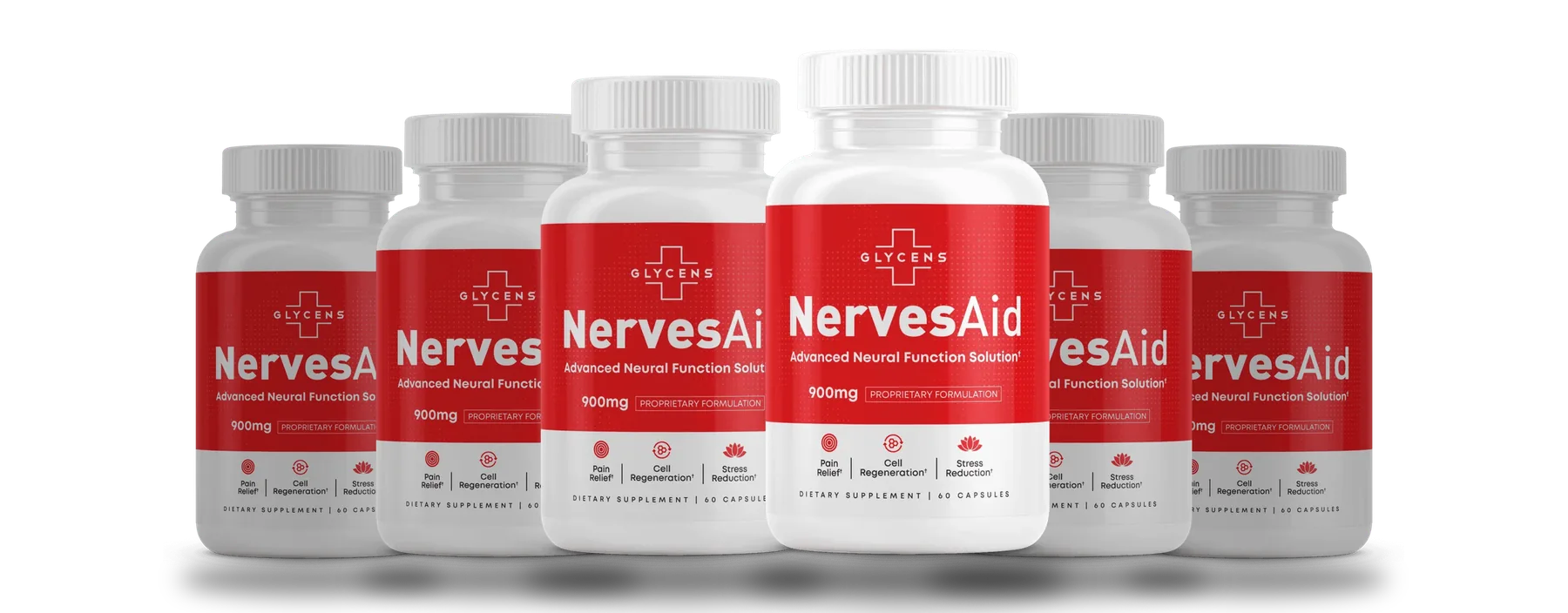
Magnesium is a cofactor in hundreds of enzyme reactions and helps regulate the flow of calcium and other minerals across nerve and muscle membranes. This role in electrical signalling is why the mineral is associated with normal nerve and muscle function and with relaxation. It also interacts with the NMDA receptor, part of the nervous system’s excitatory signalling.
Magnesium glycinate is often chosen for calm and evening use because it is well absorbed and gentle on the stomach. Citrate is also well absorbed but can have a laxative effect. Oxide is cheap and common but poorly absorbed. The best form depends on your goal and tolerance — read the label for the form and the elemental magnesium amount.
Elemental magnesium is the actual amount of the mineral you absorb, as opposed to the total weight of the magnesium compound. A 500 mg magnesium oxide capsule, for example, provides far less elemental magnesium than the number suggests. Always compare the elemental figure, not the compound weight.
Many people can. Leafy greens, nuts, seeds, legumes, whole grains and dark chocolate are all good sources. However, modern diets and food processing mean shortfalls are common, which is why some people choose a supplement to fill the gap — ideally alongside, not instead of, a varied diet.
For most healthy adults, magnesium from food and sensible supplement doses is safe. High doses of supplemental magnesium can cause digestive upset, and people with kidney problems should be especially cautious. Speak with a physician about the right amount for you before starting.
† These statements have not been evaluated by the Food and Drug Administration. This product is not intended to diagnose, treat, cure or prevent any disease. This article is for general information only and is not medical advice.